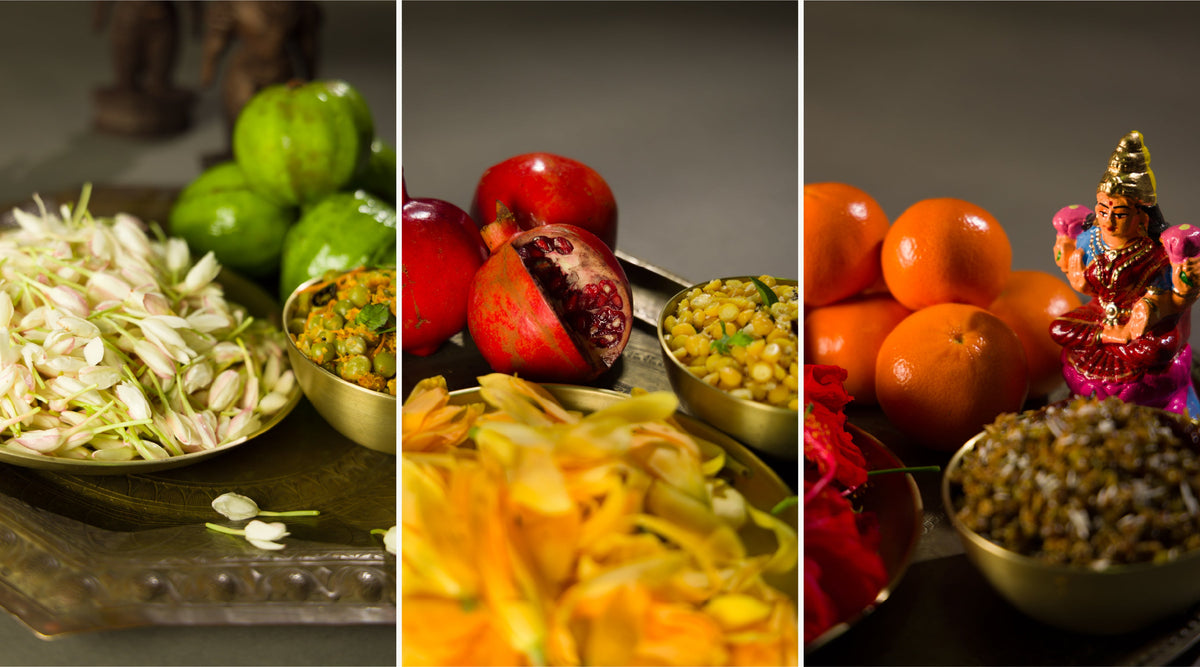
In South India, Navaratri is more than a festival; it’s a feeling. Lovingly setting up the Golu with the family; sharing homemade snacks and sweets with neighbours and friends; allowing the sounds, aromas and flavours to transport you back in time as they evoke memories of childhood. The nostalgia and emotions carry us through the nine nights of the festival.
We hope you have enjoyed journeying through South India’s Navratri traditions, recipes and objects of symbolism with Kanakavalli’s Little Rituals.
The last three nights of Navratri are in honour of the Goddess Saraswathi, the goddess of knowledge, music and the arts. The embodiment of eternal wisdom, Saraswathi is revered in South India, where Tamil culture places great emphasis on education and the arts.
Day 7 - Sapthami
While Navratri brings together entire families in South India, Golu visits are often the domain of women. It is apt, perhaps, that the festival of the goddess places women at the centre of celebrations. Women exchange thamboolam gifts, arranged on a brass plate or carefully packed in a bag that include auspicious offerings of haldi, kumkumam and betel leaves. These gifts also often include a mirror, comb and bangles, gifts that celebrate femininity. These festive gifts carry blessings from one home to another.
The flower for the seventh day of Navtari, Sapthami, is the thazhampoo reku or screwpine, whose sweet, heady fragrance grows richer in the evenings. This plant plays an important part in temple ritual as well as crafts in South India, its sharp-edged leaves forming a beloved pattern on kanjivaram borders. Today’s fruit offering is the date, a symbol of sustenance, sweetness and a life well lived.
In the spotlight today is Black Kondakadalai Sundal made with kala channa or black chickpeas and served with freshly brewed South Indian filter coffee. Rich in micronutrients like iron and high in dietary fibre, it is a great snack to regulate blood sugar and a wonderful source of plant protein.
Recipe for Black Kondakadalai Sundal (Black Channa)
Ingredients:
- Black channa – 200 grams
- Oil – 1 ½ tsp
- Mustard seeds – 1 tsp
- Red Chillies – 2
- Sundal Podi – 2 tsp (recipe in Day 2’s post)
- Grated Coconut – 4 tsp
- Asafoetida – ½ tsp
- Salt – as per taste
- Curry leaves - few
- Water - as required
Instructions:
- Wash and soak the black channa overnight.
- Pressure cook with a little salt for 5-6 whistles.
- Once the pressure subsides, drain and set aside, adding salt to taste.
- In a pan of hot oil, toss some mustard seeds until they splutter; then add asafoetida, red chillies & a few curry leaves. Add in the boiled channa and sauté it for a few seconds. Add 2 tsp of Sundal Podi and stir. Finally, add grated coconut and mix well.
Day 8 - Ashtami
The home continues to come alive each evening as we reach the penultimate night of Navratri, Ashtami; women bustling in and out of each other’s homes; finding connection in shared gifts, traditions and recipes. The objects of ritual in the spotlight today include a cone of marudani or henna and a coconut. Women adorn their hands and feet with marudani on special occasions for luck. Coconuts are essential to ritual and prayer: the hard shell representing the ego that must break open to reveal the purity within.
Today’s flower and fruit offerings are the roja (rose), a symbol of love and devotion, and the grape, a sweet symbol of abundance.
Our recipe for today is Mochai Sundal, an unusual and delicious dish made with field beans. Boiled till tender, mochai beans are packed with protein, nutrients and minerals. The earthy flavour might pair well with the rich sweetness of homemade sweets offered as prasadam during the festival.
Recipe for Mochai Sundal (Field Beans)
Ingredients:
- Mochai – 200 grams
- Oil – 1 ½ tsp
- Mustard seeds – 1 tsp
- Red chillies – 2
- Sundal Podi – 2 tsp (recipe in Day 2’s post)
- Grated coconut – 4 tsp
- Asafoetida – ½ tsp
- Salt – as per taste
- Curry leaves - few
- Water - as required
Instructions:
- Wash and soak mochai in water overnight.
- Pressure cook with a little salt for 5-6 whistles.
- Once the pressure subsides, drain the water and set aside, adding salt to taste.
- Heat oil in a pan. Add mustard seeds and let them splutter; add asafoetida, red chillies & a few curry leaves. Transfer the boiled mochai into the pan and sauté for a few seconds. Add 2 tsp of Sundal Podi and stir. Finally, garnish with grated coconut.
Day 9 - Navami
Navami, the last night of Navratri, is a special one in South India, celebrated as Ayudha Puja. In honour of Saraswathi, the family lovingly places the tools of their daily lives before the Goddess.
The idol of Saraswathi holds pride of place in the Golu. In her iconography, she is depicted dressed in white seated upon a white lotus. In her four hands – representing the mind, the intellect, the ego and consciousness – Saraswathi holds prayer bands, a manuscript, a pot of water and a veena. People pray to her for wisdom and knowledge, clarity of intellect and skill in the arts.
The kamalam or lotus, upon which the goddess sits, is the floral offering for today. Rising unstained from muddy waters, this flower represents the blooming of wisdom and the ability to flourish through difficulty. The naval pazham or deep purple jamun with its sweet and sour richness is offered in gratitude for the season’s blessings.
White Kondakadalai Sundal made with channa (chickpeas) is one of the most popular varieties and the perfect recipe for the final night of celebrations. With a creamy texture that soaks up all the flavour of the spices and garnish, this Sundal packs a punch of protein and flavour; its savoury nuttiness the perfect foil to the delicious laddoos and other sweets enjoyed as part of the Neivedhyam feast.
Recipe for White Kondakadalai Sundal (White Chickpeas)
Ingredients:
- White chickpeas – 200 grams
- Oil – 1 ½ tsp
- Mustard seeds – 1 tsp
- Red chillies – 2
- Sundal Podi – 2 tsp (recipe in Day 2’s post)
- Grated coconut – 4 tsp
- Asafoetida – ½ tsp
- Salt – as per taste
- curry leaves - few
- Water - as required
Instructions:
- Wash and soak the white chickpeas overnight.
- Pressure cook with a little salt for 5-6 whistles.
- Once the pressure subsides, drain the water and keep aside, mixing in a pinch of salt.
- Heat oil in a pan. Add mustard seeds; after they splutter, add asafoetida, red chillies & a few curry leaves. Add in the chickpeas and sauté for a few seconds. Add 2 tsp of Sundal Podi and stir. Finally, add grated coconut and mix well.
We hope you have enjoyed discovering the Little Rituals of Navratri ; from family traditions and festive offerings to favourite Sundal recipes.
Tomorrow is Vijayadashami, the tenth day of the festival that marks the culmination of nine nights of worship. We celebrate the victory of the Goddess; the triumph of good over evil and of light over darkness. Homes glow with lamps and families gather once more, celebrating auspicious new beginnings. It is a day of joy, gratitude and renewed hope for the year ahead.
As we come to the end of Little Rituals, all of us at Kanakavalli wish you and your loved ones a very Happy Vijayadashami for tomorrow! May the festival fill your homes with warmth and abundance.