
Little Rituals: Navratri's Neivedhyam - Days 1-3
The festival of Navratri means many different things to different people around the country, wrapped in a certain sense of nostalgia and emotion. In South India, it is the excitement of arranging the Golu – a display of dolls, idols and figurines on tiered steps that every family arranges in its own unique way. It is the memory of favourite sweets and snacks, offered to the gods and then shared as prasadam. And above all, it is the joy and warmth of gathering with loved ones every evening to admire each other's Golu, share favourite recipes and bask in the festive glow.
This festive season, Kanakavalli invites you to step into the Little Rituals of Navratri. Join us as we wander through the traditions and treasured objects that give these nine days their meaning.
Among the many delicious dishes prepared as Neivedhyam (offerings) during the festival, one stands out: Sundal. A hot pan, a spoonful of ghee and the sizzle of kadugu (mustard seeds), urad dal, red chillies, perungayam (asafoetida) and karuvapillai (curry leaves). Boiled chickpeas or other legumes are folded into this fragrant mix, finished with fresh coconut, tart raw mango or slivers of bright green chilli. Sundal is prepared without onion or garlic, making it the perfect offering for festive occasions. A recipe note to remember is that most legumes need to be soaked before being pressure cooked; some overnight and some for a few hours. Many homes also prepare a Sundal Podi consisting of dry roasted and ground spices that can be stored and used for different varieties of the dish.
Over the nine days of the festival, we'll discover the fruits, flowers and offerings that belong to each night, and meet the forms of the Goddess worshipped through the season. We also bring you recipes for different kinds of Sundals, one for each night of Navratri – the varieties might differ from family to family and region to region, but what remains the same is the joy and warmth with which these are prepared and shared.
The first three nights of Navaratri belong to the goddess Durga, the fierce and protective form of Shakti. Durga is worshiped as the destroyer of all obstacles: a reminder that good will triumph over evil.
Day 1 - Prathamai

The first morning of Navratri, Prathamai, is one the entire family looks forward to. The day begins with a hum of excitement: the bustle around the Golu as the deities are set out one by one on an odd number of tiered steps. A special ritual marks the start of the festival in South Indian homes: the kalasam, a sacred pot filled with water and topped with mango leaves and a coconut, is placed at the centre of the Golu display. This signifies abundance and the presence of the divine feminine.

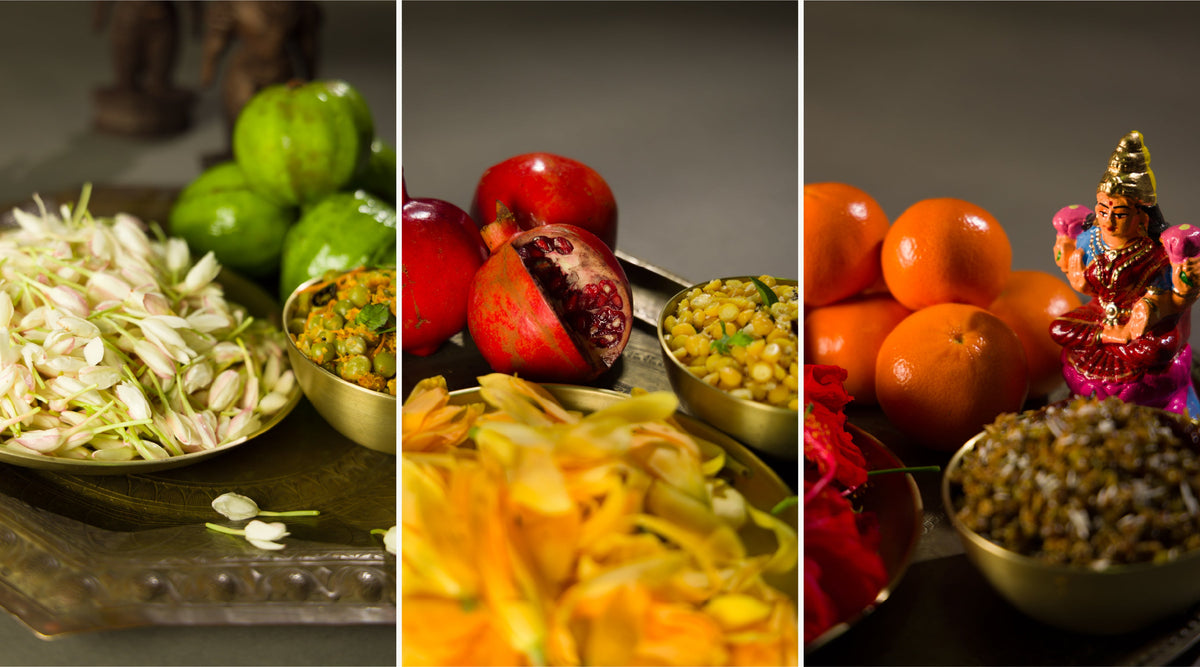
Each day of Navratri is tied to a fruit and flower: today it is vazhapazham (banana), a symbol of abundance and the circle of life, and mallipoo, the much-loved jasmine bud which stands for feminine grace and divine purity.
To begin the celebrations, we bring you a recipe for Paasi Paruppu, or Moong Dal Sundal. It is as nourishing as it is delicious, rich in protein and fibre, and just the fuel you need to keep you going through the festivities. Light on the stomach, it pairs nicely with panagam, a cooling jaggery drink flavoured with cardamom and ginger.

Recipe for Moong Dal Sundal (Paasi Paruppu)
Ingredients:
- Moong dal – 200 grams
- Oil – 2 ½ tsp
- Mustard seeds – 1 tsp
- Jeera – 1 tsp
- Green chilli – 2 (cut into small pieces)
- Grated Coconut – 4 tsp
- Asafoetida – ½ tsp
- Salt – As per taste
- Curry leaves – a few
- Coriander leaves to garnish
- Water - as required
- Wash & soak the moong dal in water for 15 minutes. Drain the water & set aside.
- Bring a pot of water to the boil with a pinch of salt and 1/2 tsp cooking oil.
- Once boiling, add the drained moong dal and cook without a lid for 20 minutes until soft.
- Once it is cooked completely, remove from the stove, drain & keep aside. It should be soft but should retain its shape & texture.
- Heat 2 tsp oil in a pan. Add mustard seeds and let them splutter; add asafoetida, jeera, & green chillies. Cook for few seconds.
- Add the boiled dal to the pan, add grated coconut & curry leaves and sauté for a few more seconds giving it a good stir. Switch off the gas, add coriander leaves and serve.
Day 2 - Dvithiyai

Inside, the soft light of the kamatchi vilakku, a symbolic lamp in the form of the goddess, spreads its warmth through the home.

Today's flower is mullai, the delicate jasmine symbolising purity and devotion, whose sweet fragrance drifts through the house. The fruit for day two of the festival is the beloved, golden mambazham or mango, a sign of sweetness and good fortune.
Our recipe for the day is Nilakkadalai Sundal, made with peanuts. Tossed in the familiar tempering of mustard seeds, curry leaves and a pinch of asafoetida, it has a gentle crunch and a nutty richness that makes it a favourite with children and grown-ups alike. A great source of protein for a quick snack, the Nilakkadalai Sundal goes perfectly with a hot cup of masala tea.

Recipe for Nilakkadalai Sundal (Peanuts)
- Peanuts – 200 grams
- Oil – 1 ½ tsp
- Mustard seeds – 1 tsp
- Red chillies – 2
- Sundal podi – 2 tsp
- Grated coconut – 4 tsp
- Asafoetida – ½ tsp
- Salt – As per taste
- Curry leaves - few
- Water - as required
Sundal Podi Recipe: This 'podi' or powdered dry roast blend recurs over various sundals, adding a distinctive flavour bomb to the preparation.
- Channa dal – 1 tbsp
- Urad dal - 1 tbsp
- Red chillies – 5
- Coriander seeds – 2 tbsp
- Wash and soak the peanuts in water overnight.
- Pressure cook the peanuts in water with a little salt for 5-6 whistles. Simmer for 5 minutes and then take off the stove.
- Once the pressure subsides, drain the water and keep aside in a bowl. Add a pinch of salt to the boiled peanuts and mix.
- Heat oil in a pan. Add mustard seeds and let them splutter; add asafoetida, red chillies & a few curry leaves. Add the boiled peanuts and sauté for a few seconds. Add 2 tsp of Sundal Podi and stir. Finally, add grated coconut and mix well.
Day 3 - Thrithiyai

The third night of Navratri, Thrithiyai, is the last dedicated to the worship of the goddess Durga. Considered invincible, Durga is often depicted riding a lion or a tiger to symbolise her absolute power and courage.

Today's floral offering is thulasi, the sacred basil plant which blesses the home with purity and protection. The jackfruit or palapazham is a rich and sweet fruit, its generosity that feeds many, perfectly suited to the festive spirit of sharing.

Recipe for White Karamani Sundal (Cowpea)
- White karamani – 200 grams
- Oil – 1 ½ tsp
- Mustard seeds – 1 tsp
- Red chillies – 2
- Asafoetida – ½ tsp
- Sundal Podi – 2 tsp (refer Day 2’s sundal recipe for Sundal Podi)
- Grated coconut – 4 tsp
- Salt – As per taste
- Curry leaves - few
- Water - as required
- Wash and soak the karamani in water overnight.
- Pressure cook the cowpeas with a little salt for 3-4 whistles.
- Once the pressure subsides, drain the water and keep aside. Add salt to taste.
- Heat oil in a pan. Add mustard seeds; after they splutter, add asafoetida, red chillies & a few curry leaves. Transfer the boiled karamani into the pan and sauté for a few seconds. Add 2 tsp of Sundal Podi and stir. Finally, add grated coconut and mix well.
Stay tuned as Kanakavalli’s Little Rituals continues to spotlight the special offerings for each night of Navratri, including more recipes for delicious varieties of Sundal.